

Advice for the First-Time Renovator
13 nuggets that the second- or third-time renovator could hear, too!


Last week I was a guest of the legendary Amanda Hesser in The Guest Room, a feature on her hugely popular Substack, Homeward. It feels distinctly American (in a good way!), which is why I was both surprised and honoured to be invited to contribute from my British (at least from a renovating perspective) point of view. I answered a bunch of questions about our home renovation and my approach to design in general. One of the questions I was asked is what advice I have for the first-time renovator. Turns out, I have a lot so I decided to expand upon my answer for this week’s newsletter.
If you’d like more from me about my own renovation at home, you can find that over at Homeward. Herewith, my much-expanded 13 nuggets of advice for those who are embarking on their first (or any!) renovation.
Design for the space you have.
So often clients send me mood boards of gorgeous houses that have nothing to do with the bones of their home. Every building is so particular, so the design has to start with what’s required for the specific people living in that specific space in its specific location.
In England, many of the buildings we live in are very similar to each other — terraces built across the 18th to 20th centuries. In that sense, we have a large pool of available, relevant inspiration. But even in relatively similar terraces, the position, scale, size, quirks and previous renovations of the home all make huge differences in what could and should come next.
Set yourself some North Stars.
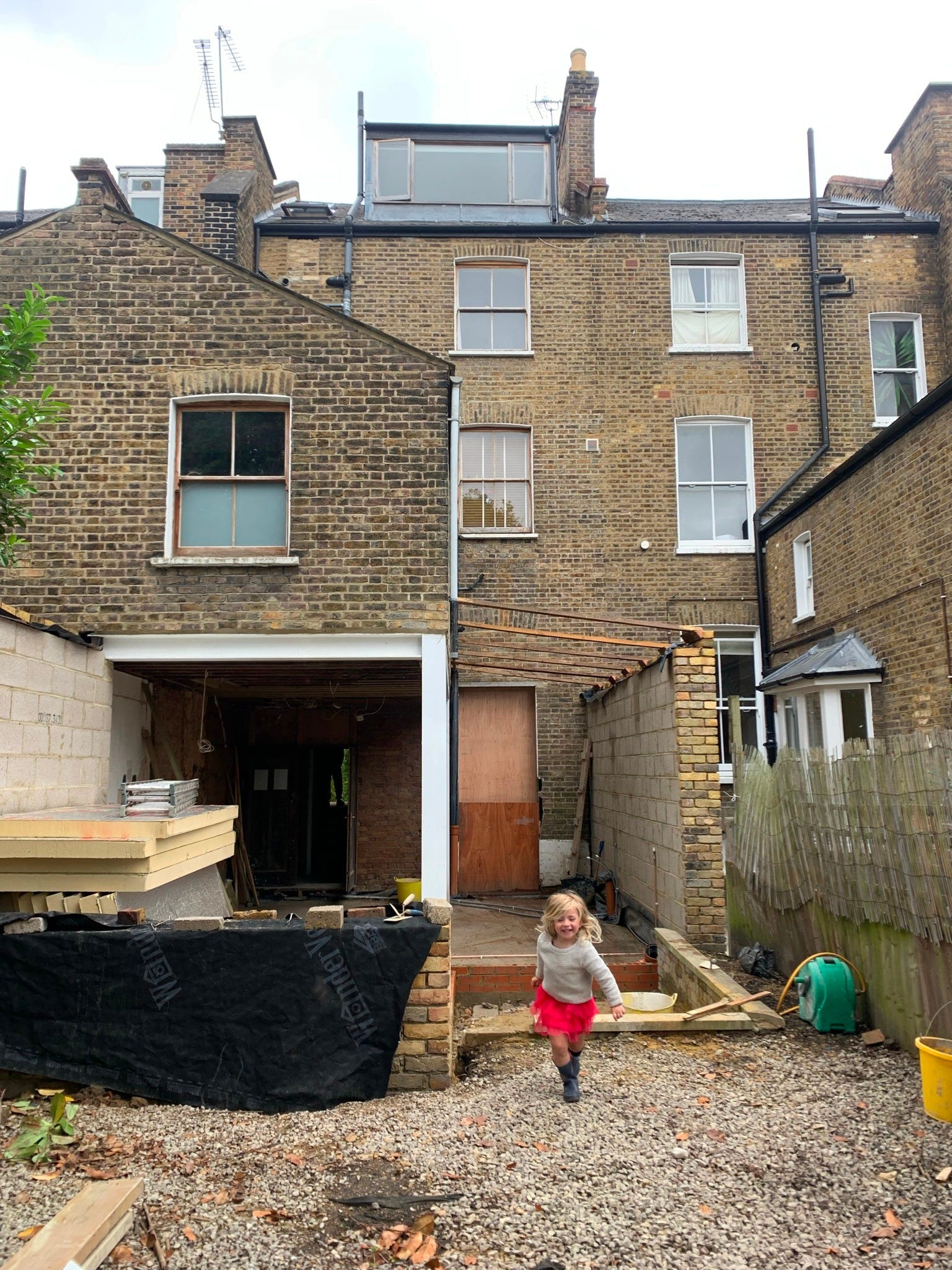
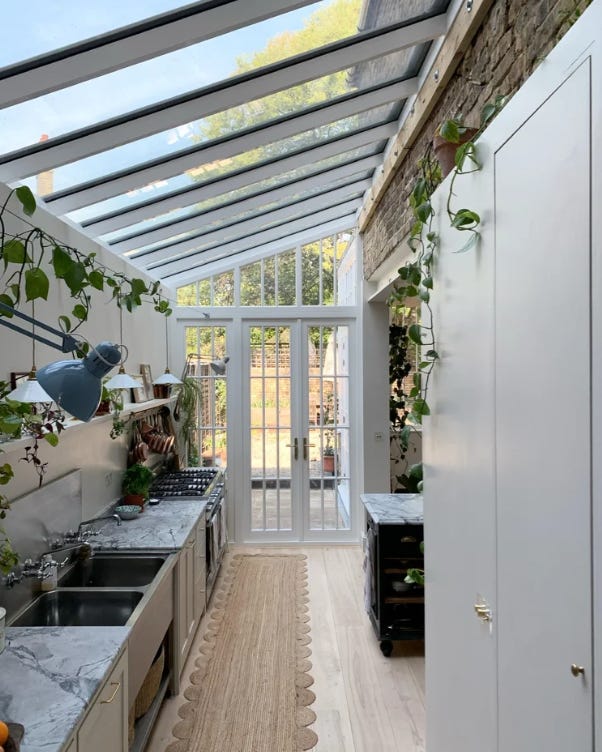
This is my number one piece of advice. A North Star is essentially a non-negotiable. It could be something like incorporating your grandmother’s artwork or a double-bowl sink, or it could just be a feeling you want a room to evoke. When we did our major renovation, our North Star was having a fully glass roof over the kitchen. A North Star needs to be feasible, of course, but once it’s set, all other decisions will be easier to make as they revolve around it. A helpful North Star when inspiration is lacking can be to make a space feel welcoming however that feels for you.
Consider lighting from the beginning.
After layouts, lighting is the most important thing. You may need a professional to help here but for the love of all things good do not just bung up the spotlights drawn into your electrical plan. Really think about lights, circuits, sockets and switches. The fixtures themselves should ideally be chosen in conjunction with the creation of the plan, as what fixture goes where will determine how many are required and their precise positioning. I think I need to do a whole post on this subject to be honest!
Ask for help but trust your gut.
Yes, sometimes asking your friends, your builder and your mum for their opinions means you have five wildly different opinions on how you should proceed. And yes, when your builder insists that you need to have metal edging on your tiles but your gut says you don’t want metal edging, trust your gut. (And also ChatGPT, he’s great, too.) So I’ll clarify by saying that you can and should ask for help from people you trust. This could be a friend or relative with experience or taste you admire. This could also be a professional. There are lots of designers like me who do one-off consults where you can quickly get a great deal of expert advice on anything from layouts to fabric. I do virtual and in-person consultations many times a week and am always amazed how efficient and useful they are for the client seeking advice.
Be kind to, and patient with, everyone working on your project. Including yourself.
People will mess up, things will be done incorrectly, and it may will get very stressful! Yes, there are cowboys out there but most of the people working on your project will be trying their best. Remembering that it’s a privilege to own and renovate a home, and trying to keep a good atmosphere onsite, can make such a big difference in everyone’s stress levels and ability to problem solve. Plus, it’s just nice :)
The same goes for you. You may make mistakes and you may have some regrets, but that’s OK, we’re all just learning and the great thing about designing a home is that there’s no “right” way to do it! Do it your way and don’t beat yourself up.
